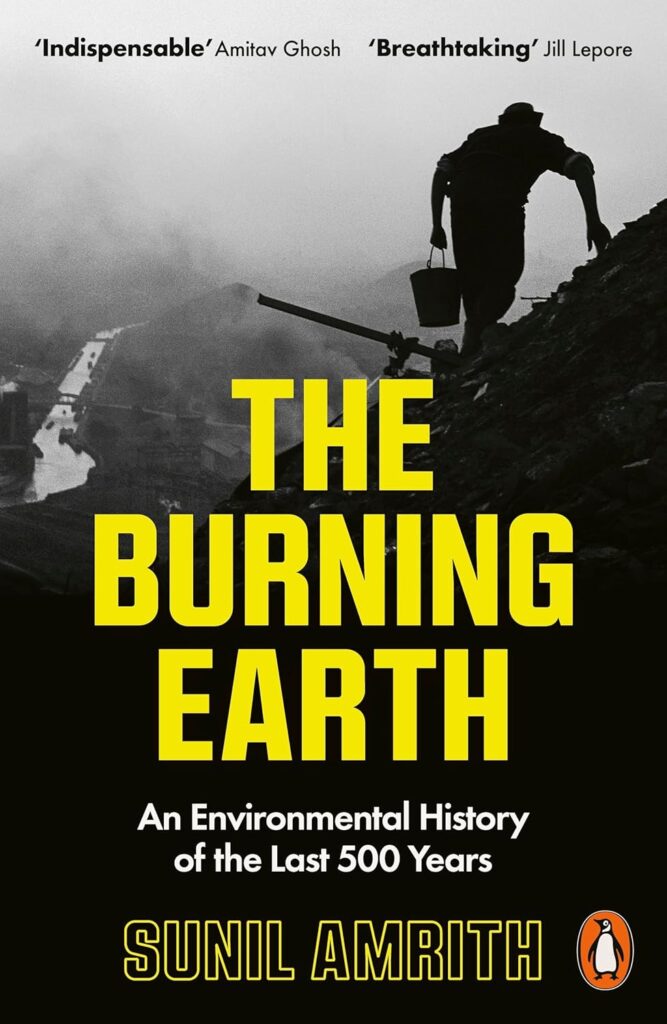
The Burning Earth examines the global environmental crisis through a long historical lens.
Sunil Amrith argues that climate change is not just a modern problem but rooted in centuries of human activity.
The book connects imperialism, industrialization, and environmental destruction across continents.
Amrith highlights how Asia, Africa, and the Global South have been central to environmental history.
He shows how forests, oceans, and climate systems were reshaped by colonial power and capitalism.
The narrative blends environmental science with social and political history.
Ordinary people, not just governments, are shown as both victims and agents of change.
The book stresses that environmental crises are deeply tied to inequality and injustice.
Amrith warns that ignoring historical responsibility weakens solutions to climate change.
The Burning Earth ultimately calls for a more global and ethical response to the planet’s future.
- Publication Date: 2025
- Pages: 432
- Cost: £9.76
Our review in brief:
| 1. Rating: 6.9 Scores ranged from 3 - 10 |
| 2. Recommended: Very few members would recommend the book |
| 3. Audience: It was more suited to people with a limited knowledge of history, who wanted to learn more. It is impossible to put a full history in 400 pages. It may suit people who want a starting point to then go on and do more specific reading. |
| 4. Type of Read: The book needed concentration and used a lot of words that were not familiar to some readers. There were a vast array of characters and places, which were difficult to keep track of. For some readers it was not engaging. |
| 5. Strengths: Within the text there were some very interesting snippets of information that made you think. It made you realise that we do not learn from previous mistakes and our governments continue to implement policies for quick gains without considering the long term consequences. For some it piqued their interest and would lead them to read more on this subject. |
| 6. Weaknesses: To make a full evaluation of the impacts of historical events on the land and its people, you needed far more information. It felt superficial. To quote one member "it was too broad brush" The book seemed to drift in places and needed more focus. |
| 7. Other Observations: The book was good for a book club as it resulted in a great deal of discussion on the subject matter of the book and other related subjects. This included what should make up GDP and is income received for sex vatable! |