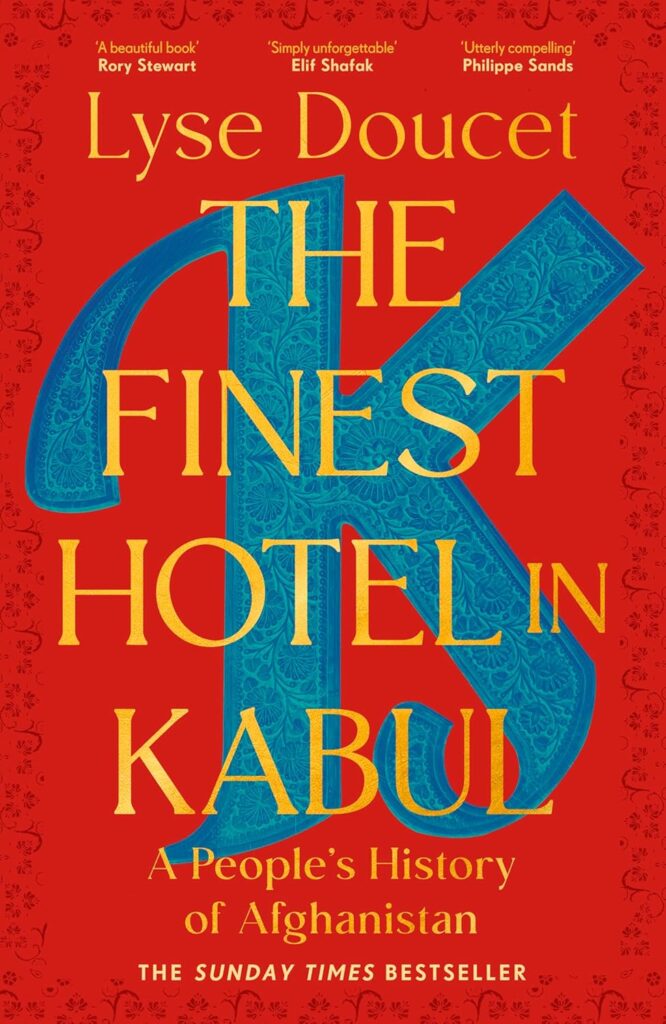
The Finest Hotel in Kabul is a memoir by journalist Lyse Doucet about her time reporting from Afghanistan.
The book centers on the old InterContinental Hotel in Kabul, which becomes a symbol of the country’s turmoil and resilience.
Through stories of the hotel’s guests, workers, and visitors, Doucet paints a vivid picture of life during years of conflict.
She blends personal memories with political history, showing how ordinary people lived amid war and uncertainty.
The memoir highlights Afghanistan’s complexity, moving beyond simple headlines about violence and terrorism.
Doucet reflects on the struggles, hopes, and dignity of Afghans she met during her reporting.
The hotel serves as a meeting place where diplomats, journalists, aid workers, and locals cross paths.
The book also explores the emotional burden of witnessing suffering as a foreign correspondent.
Overall, it offers a compassionate and deeply human account of Afghanistan’s modern history.
It is both a personal journey and a powerful reflection on war, memory, and survival.
- Publication Date: 2025
- Pages: 420
- Cost: Used £10
Our review in brief:
| 1. Rating: 6.3 out of 10 -Scores ranged from 4 to 8 |
| 2. Recommended: A couple of members said they would recommend it. Others felt it was too miserable. |
| 3. Audience: People that have an interest in the History of Kabul, but do not want to read a text book, may appreciate the very approachable style. People who know about the political history of Afghanistan, may find that understanding the impact on the people (albeit - limited to Kabul) is interesting. The book would not suit someone wanting to learn about the history of the country, as its scope was very limited. |
| 4. Type of Read: It was an easy book to read, as it was structured like a novel, but it was repetitive in places and it was difficult to follow the names. The story was inevitably depressing. |
| 5. Strengths: The book looked at the trials and tribulations of Afghanistan through the eyes of hotel staff which was a clever approach, owing much to the author's journalistic experience. It gave you a flavour of life for the people working in the hotel, (but no one else). Some readers became engaged with the characters and were keen to see then thrive. |
| 6. Weaknesses: The information given lacked deeper analysis. More about the politics and less about the fluffy towels would have made the book more interesting. The book is called "the people's history of Afghanistan" but the events are centred on Kabul, when often the bigger picture was clearly playing out elsewhere. There was a lot of "padding". For example, the description of all the food, was not really necessary. It needed better editing. It felt in places that there had been sone artistic licence, when describing events and emotions. The characters did not discuss the political activity in either a positive or negative way, which gave the impression they were being careful what they said when being interviewed. |
| 7. Other Observations: There were too many unanswered questions about the people and how they survived when they had no money. The pictures were helpful in bringing the characters to life. If the book was cut up and serially published, it would be very suitable for articles in a quality Sunday newspaper. |