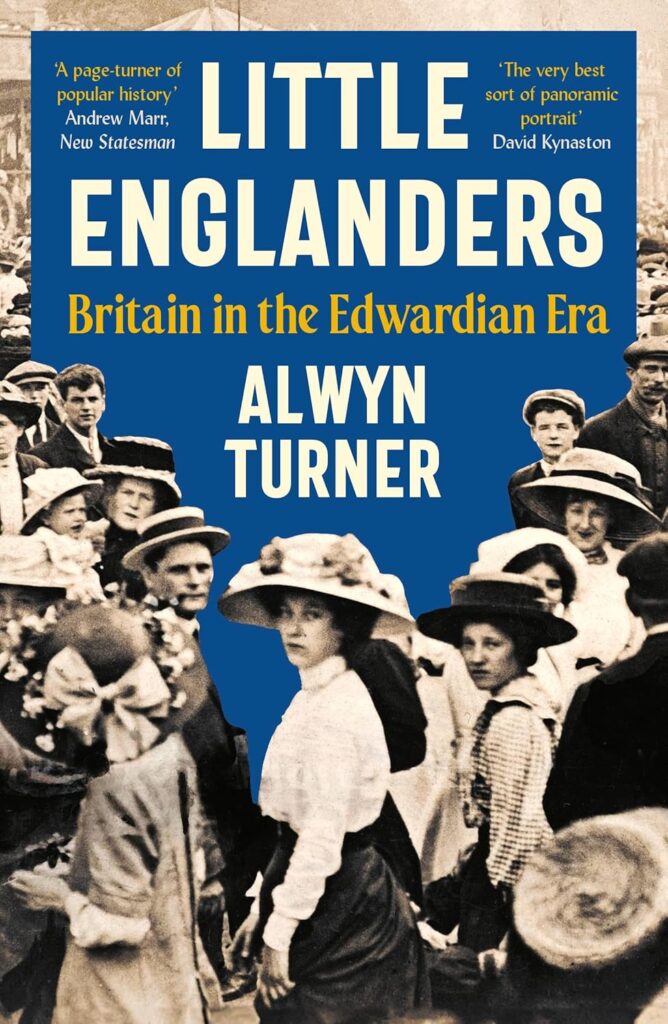
Explores Britain from 1901–1914 under Edward VII.
Depicts a society confident yet deeply divided.
Covers class inequality, imperialism, and social reform.
Shows tension between tradition and modernity.
Examines politics, culture, and everyday life.
Highlights labor unrest and women’s suffrage.
Challenges nostalgia for a “golden age.”
Shows cracks beneath imperial self-confidence.
Rich in anecdotes and cultural detail.
Portrays an era unknowingly approaching catastrophe.
Pages: 400
Publication Date: 2024
Cost: £11.99
Our review in brief:
| 1. Rating out of 10: 7.1 Scores ranged from 5-9 |
| 2. Recommended: At least half the group said they would recommend the book, but with some reservations, as people may find the emphasis on the impact of music hall a little repetitive. |
| 3. Audience: It would suit anyone who has an interest in social history. For someone who wants to learn more about the politics and economics of the Edwardian Period, this is not the book for them |
| 4. Type of Read: Some members found the books hard work, while others thought it was a fairly easy read. It was difficult to keep track of everything that was going on. |
| 5. Strengths: The book managed to cover a significant amount within 400 pages. The focus was unusual, as it was based around music halls, newspapers, and books written in that period. This made it more accessible than a straight forward history book. |
| 6. Weaknesses: Some members felt there was not enough social history and too many literary references. The constant use of music halls as a means of illustrating life in the Edwardian Era, felt over done. There were also too many lists and quotes from other writers. |
| 7. Quality of Author: Half of the group said they would read another book by this author. |
| 8. Other Observations: The book showed how the fears of the Edwardians (immigration, workers rights, social divide, welfare and the impact of mass media.) are the same as those faced in 2026 England. The book gave you a sense that the Edwardian Era was the start of a turning point in terms of the influence of the working class and social inequality. The book felt a bit crowded as it included so many figures from entertainers, sportsmen, politicians, authors fraudsters, suffragettes, newspaper barons and murders, that it was hard to take it all in. |